Bio-Systems Engineering Department
The technical organ of the Directorate. We design, deploy, and sustain the instrumentation, data fabric, actuation, and autonomous control plane that keep 1.24M specimens alive, observed, and contained across the Sector-7 Arboretum Complex.
Mission
Bio-Systems Engineering exists to render the living collection legible, controllable, and survivable. Every cultivar in the facility is wrapped in a closed observation–decision–actuation loop: the PhytoSense Mesh senses plant state, the Mycelial Data Fabric transports it, CHLORA reasons over it, and the climate / irrigation / containment actuators close the loop — typically in under 900 ms end-to-end. We hold the engineering authority for instrumentation accuracy, control-loop stability, and the physical-safety interlocks that back every SOP. We do not set botanical policy; we make it executable and observable.
Department KPIs
Systems Portfolio
Seven engineered systems form the backbone of the facility. Each carries a controlled specification under the VC-ENG-2xxx series and an assigned system owner.
| System | Spec ID | Function | Owner | SLA / Target | Status |
|---|---|---|---|---|---|
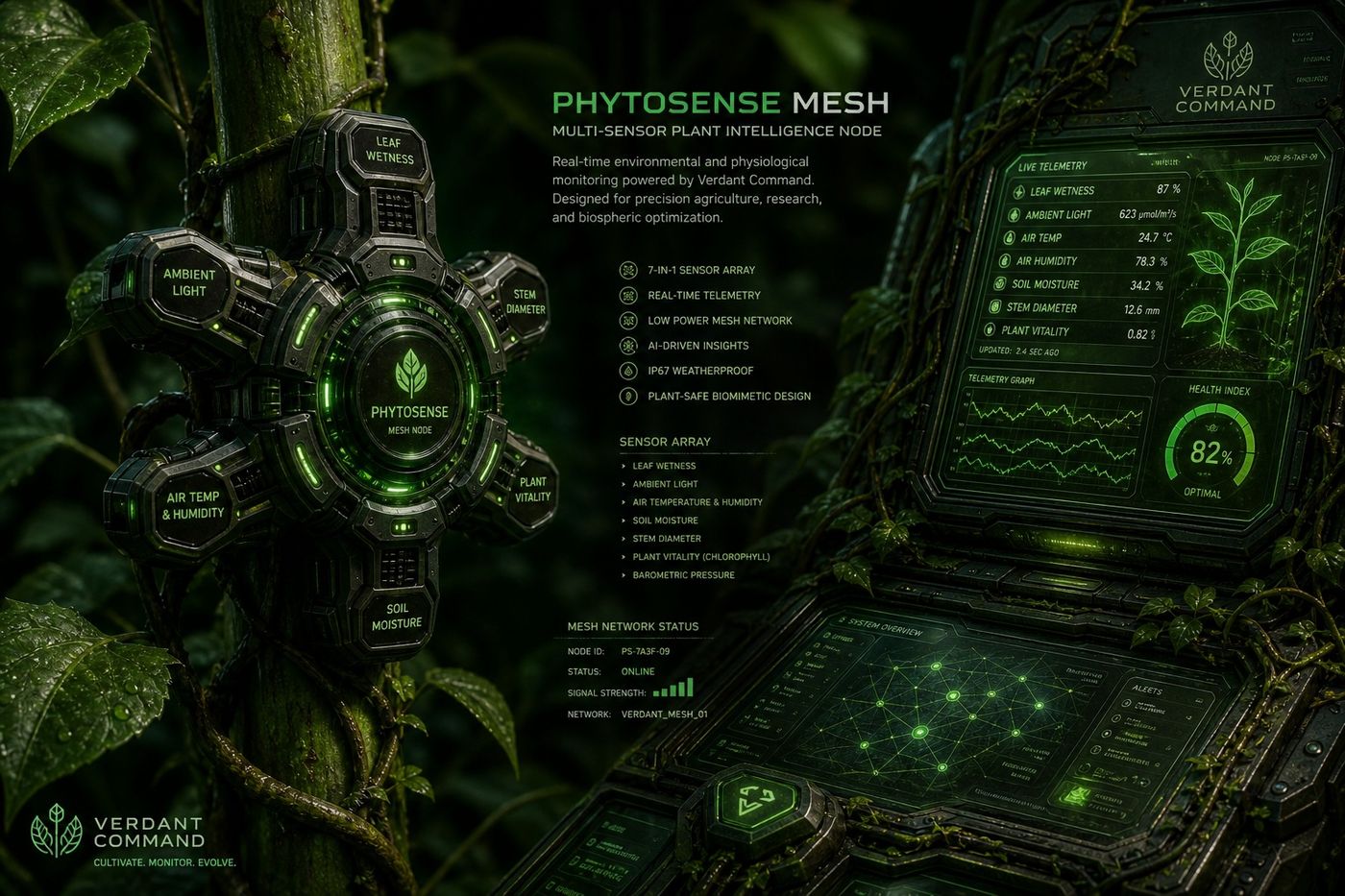
| PhytoSense Mesh | VC-ENG-2101 | Distributed plant-health sensor network — sap flow, turgor, VOC, fluorescence | K. Aldous | ≥99.3% node uptime | ● Nominal |
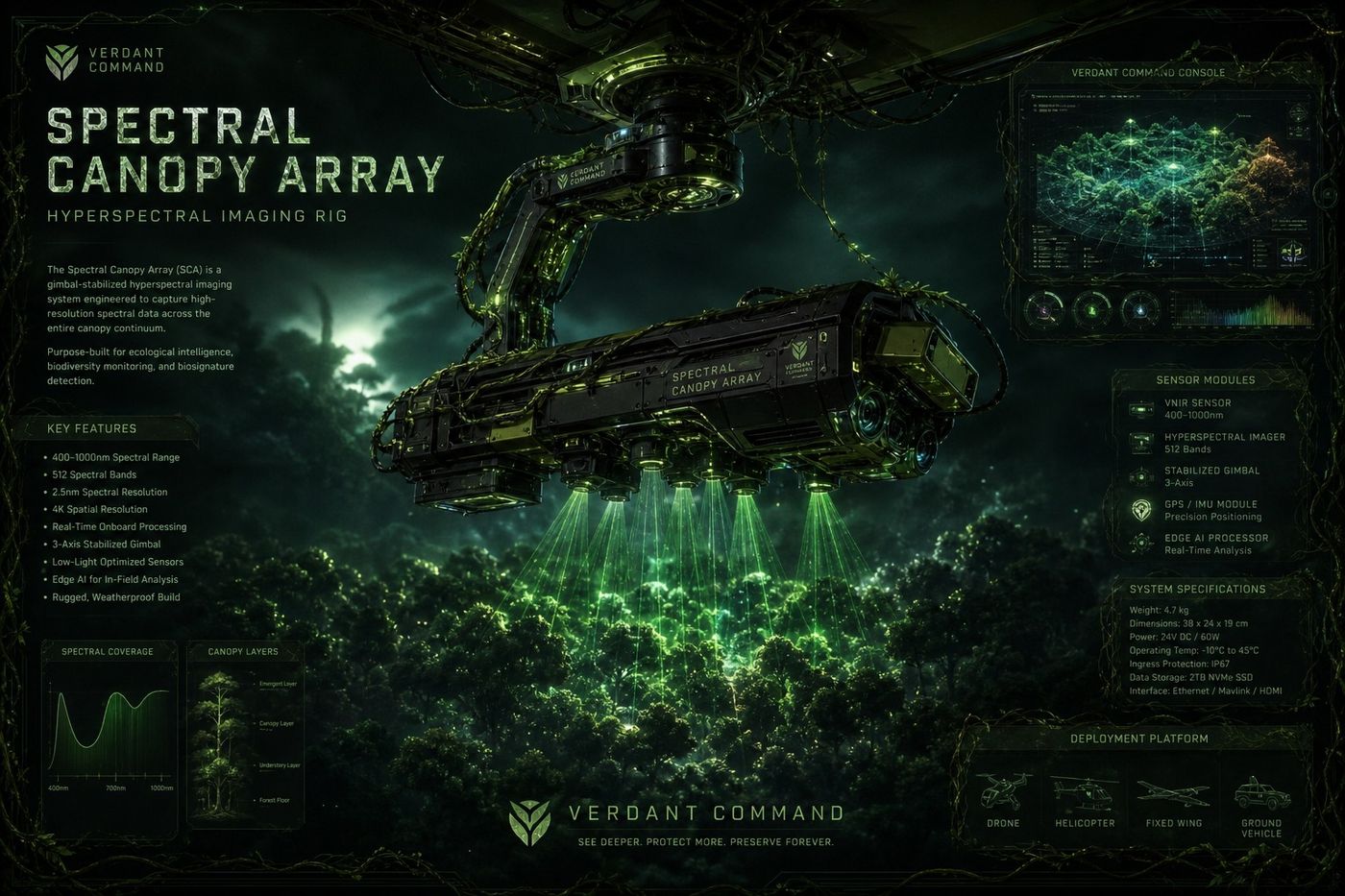
| Spectral Canopy Array | VC-ENG-2140 | Hyperspectral / thermal canopy imaging & vegetation indices | K. Aldous | Full-grid scan ≤6 h | ● Nominal |
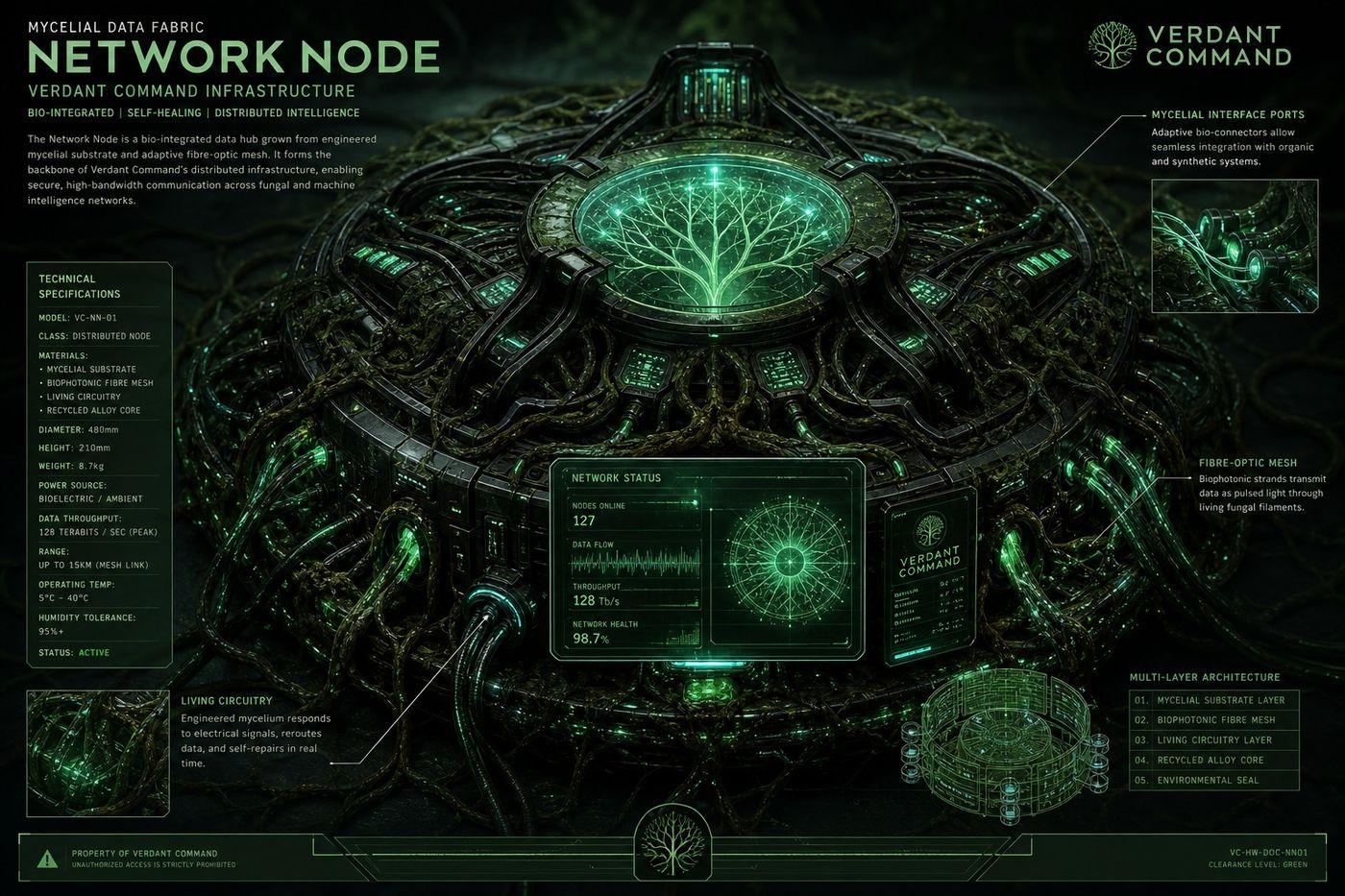
| Mycelial Data Fabric | VC-ENG-2200 | Self-healing mesh data & comms backbone, time-sync, storage tiers | R. Okonkwo | p95 <40 ms intra-site | ● Nominal |
| CHLORA Control Plane | VC-ENG-2300 | Autonomous cultivation, health, logistics & response automation (AI ops) | Dr. H. Voss | 99.9% control availability | ● Nominal |
| Climate Actuation | VC-ENG-2120 | HVAC, vapor-pressure-deficit, CO₂ dosing & spectral lighting control | M. Travers | VPD ±0.08 kPa | ● Nominal |
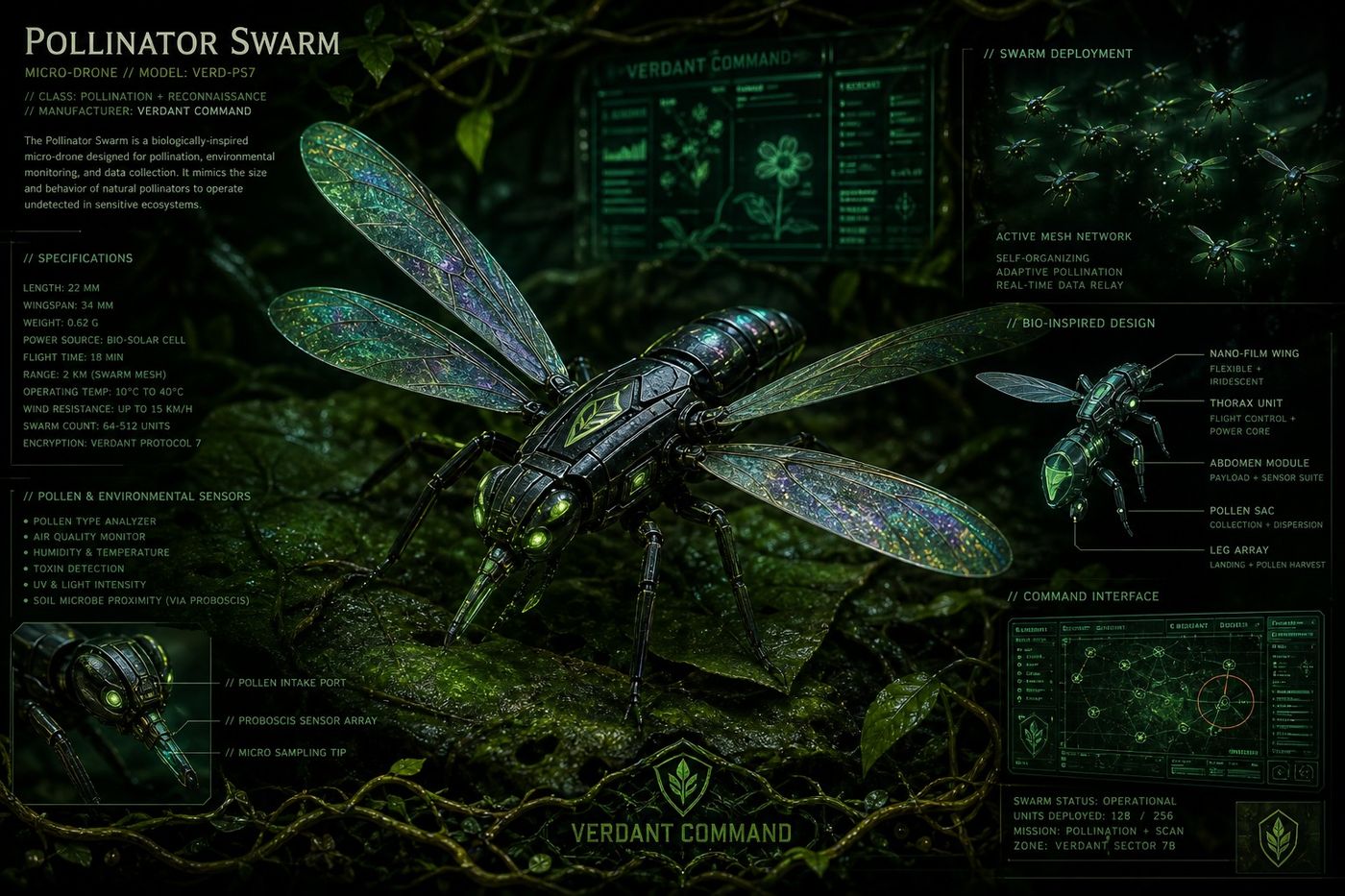
| Pollinator Drone Swarm | VC-ENG-2160 | 1,920 autonomous micro-drones — pollination, micro-inspection, sampling | J. Park | ≥94% fleet available | ◐ 41 in bay |
| Power / Hydro Plant | VC-ENG-2180 | Redundant power, hydro-loop pressure & nutrient dosing distribution | M. Travers | Hydro 1.8–2.4 bar | ◐ Watch zone |
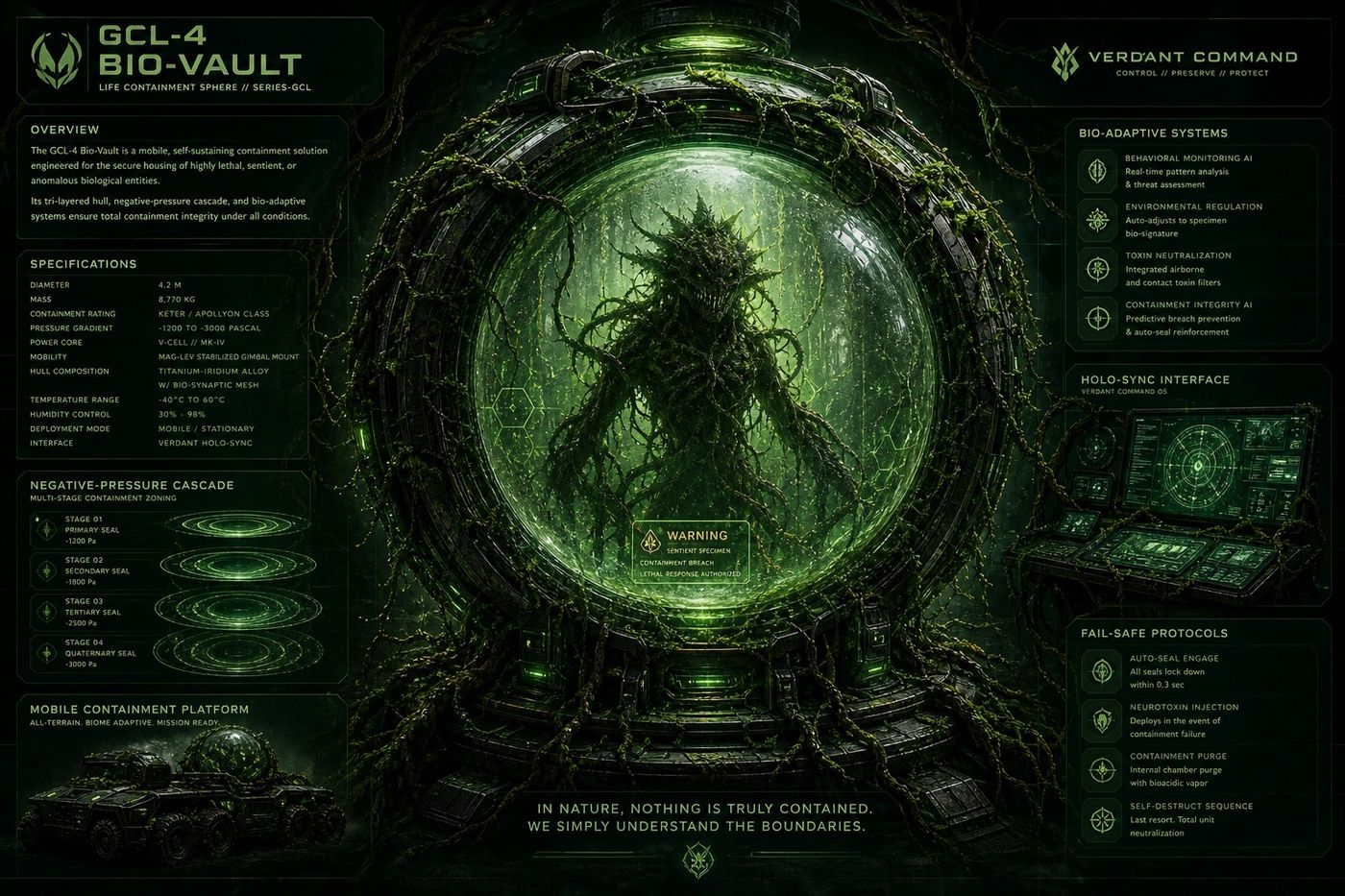
Facility Hardware
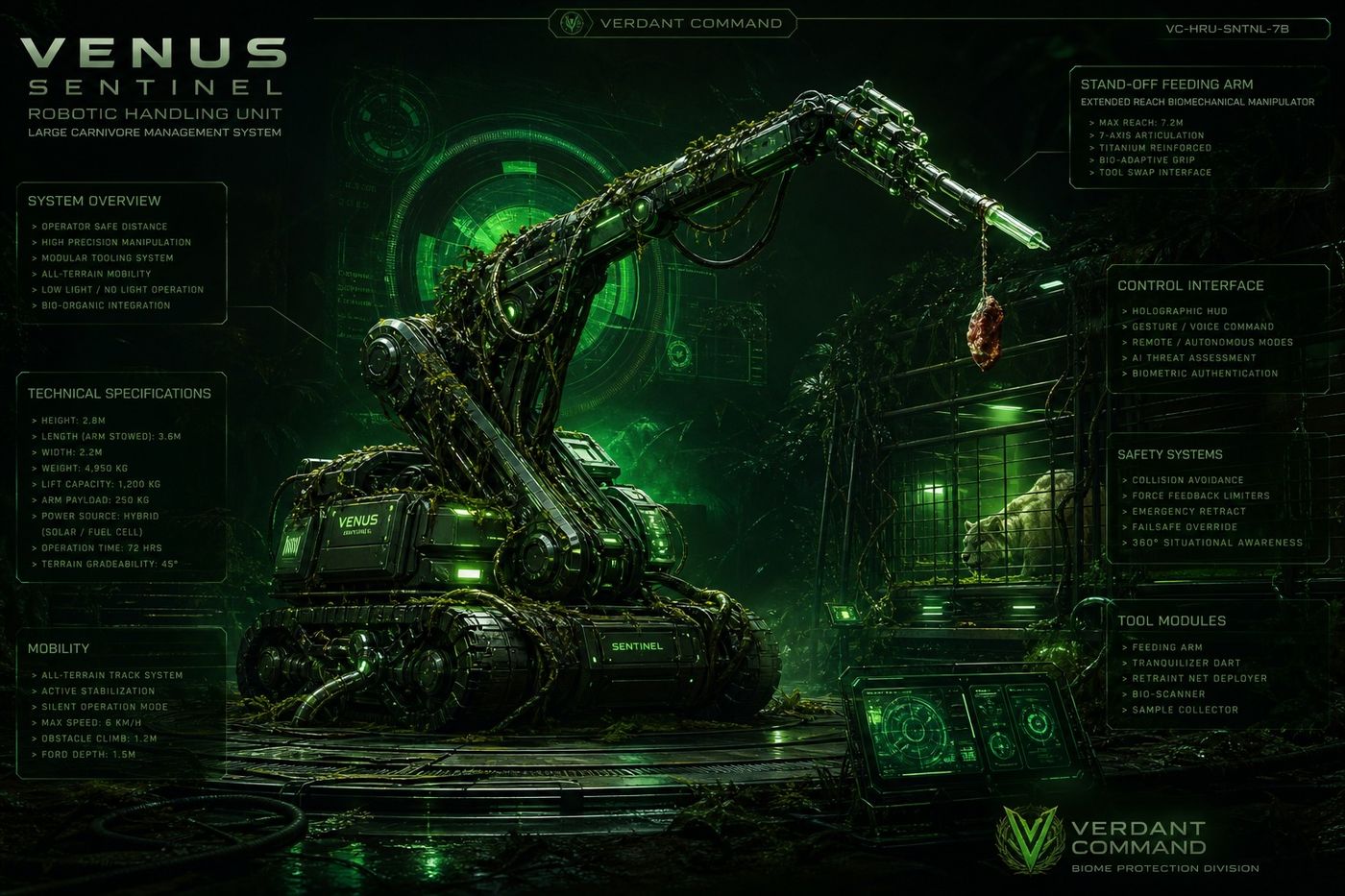
Reference renders of the principal field and containment hardware operated by Engineering. Each unit is maintained under the VC-ENG-2xxx spec series; imagery is indicative of the deployed configuration.
Engineering Team Structure
Office of the Director
Dr. Helena Voss, P.Eng — Director. Owns architecture authority, the CHLORA control plane, and the engineering change-control board (ECCB). Single point of accountability for control-loop stability.
Sensing & Imaging Group
Lead: K. Aldous · 9 engineers. PhytoSense Mesh, Spectral Canopy Array, calibration lab, and node manufacturing liaison. Owns measurement accuracy budgets.
Data Fabric & Platform Group
Lead: R. Okonkwo · 7 engineers. Mycelial Data Fabric, time-sync, storage tiers, API surface, and security/encryption posture.
Climate, Power & Hydro Group
Lead: M. Travers · 8 engineers + 4 technicians. Climate actuation, power plant, hydro-loop, and the physical safety interlocks behind containment.
Autonomous Fleet Group
Lead: J. Park · 6 engineers. Pollinator Drone Swarm, charging bays, flight-path deconfliction, and Venus Sentinel handling rigs.
ENG-NOC & Reliability
Lead: S. Mbeki · 6 on rotating 4-shift coverage. Network operations centre, on-call escalation, incident command, and the maintenance scheduler.
Change Management & Maintenance Cadence
All production change flows through the Engineering Change Control Board (ECCB), chaired weekly by the Director. Changes are classed by blast radius; anything touching a GCL-3/GCL-4 containment interlock requires CBO co-signature.
| Class | Example | Approval | Window | Rollback Target |
|---|---|---|---|---|
| Standard | Dashboard tweak, non-loop firmware | Group Lead | Any low-traffic hour | ≤5 min |
| Significant | Control-loop tuning, MDF routing | ECCB (weekly) | Tue/Thu 02:00–04:00 UTC | ≤2 min |
| Critical | Containment interlock, CHLORA autonomy tier | ECCB + Dr. Ireland (CBO) | Scheduled maint. only | Hot-standby cutover |
| Emergency | Active P1 mitigation | Incident Commander, retro-reviewed | Immediate | Documented in FSR |
Preventive Maintenance Cadence
- Daily — ENG-NOC health sweep, drone bay charge audit, hydro-loop pressure log review.
- Weekly — PhytoSense rolling self-calibration audit (≥98% in-window), MDF route-table reconciliation, backup integrity check.
- Monthly — Spectral Canopy white/dark reference panel verification, actuator response-time benchmark, firmware patch train.
- Quarterly — Wet-lab gravimetric re-calibration of a 5% sensor sample, power transfer-switch live test, containment interlock fault-injection drill.
- Annual — Full architecture review with CBO, disaster-recovery failover exercise, CHLORA model revalidation against gold-standard agronomy panel.
Monitoring Systems
Detailed controlled specifications for the observation and control stack:
Monitoring Systems
Architecture of the telemetry pipeline, system catalog, and live status board.
🌡VC-ENG-2101PhytoSense Mesh
Hardware spec, sensor suite, calibration, data schema, and redundancy.
🛰VC-ENG-2140Spectral Canopy Array
Hyperspectral imaging bands, vegetation indices, gimbal, and data products.
🕸VC-ENG-2200Mycelial Data Fabric
Self-healing mesh backbone, SLAs, time-sync, storage tiers, and API surface.
🧠VC-ENG-2300CHLORA Control Plane
Autonomy tiers, control loops, guardrails, and CBO master override.
🚨VC-ENG-2400Alarm & Escalation Matrix
Trigger thresholds, severities, auto-responses, and escalation timing.